

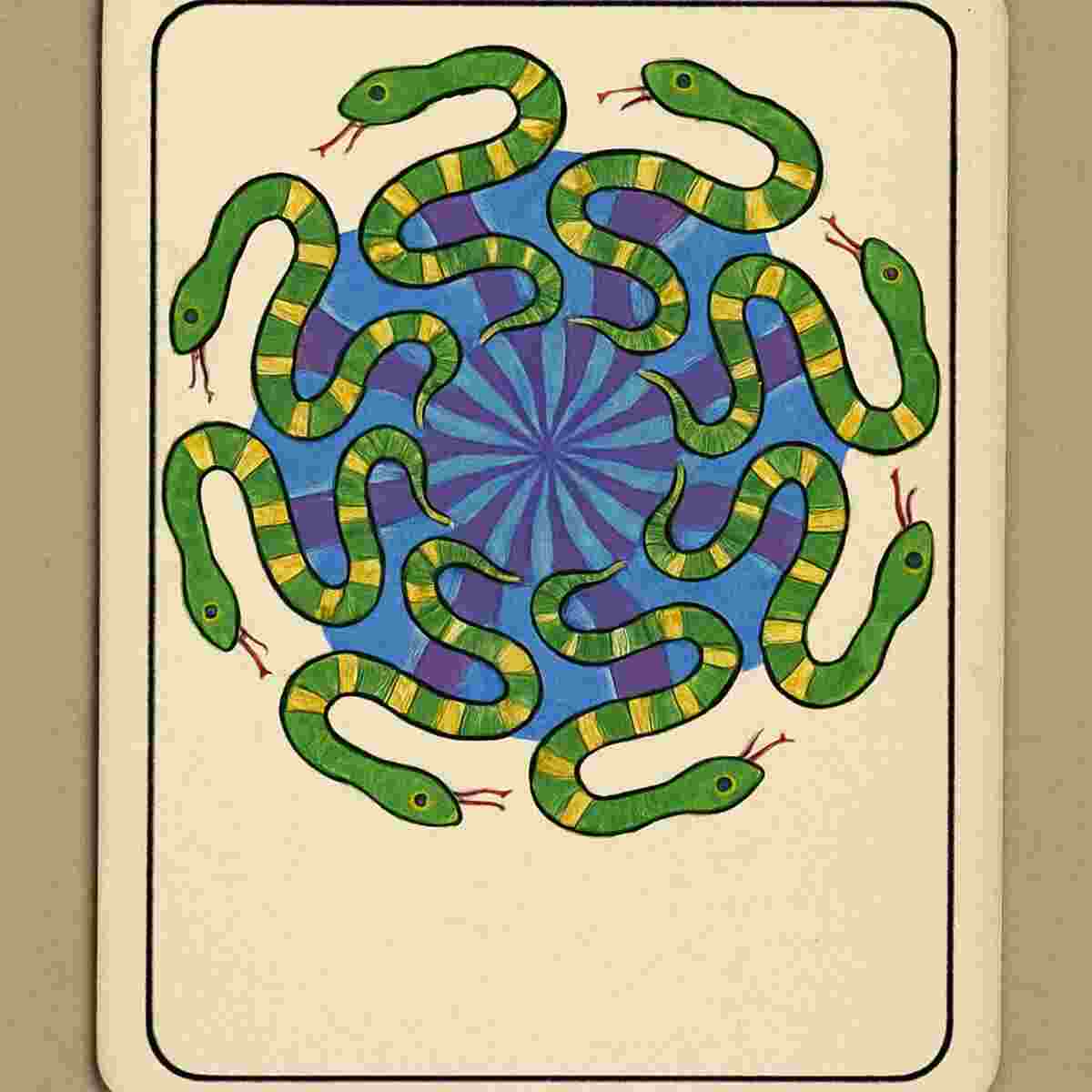

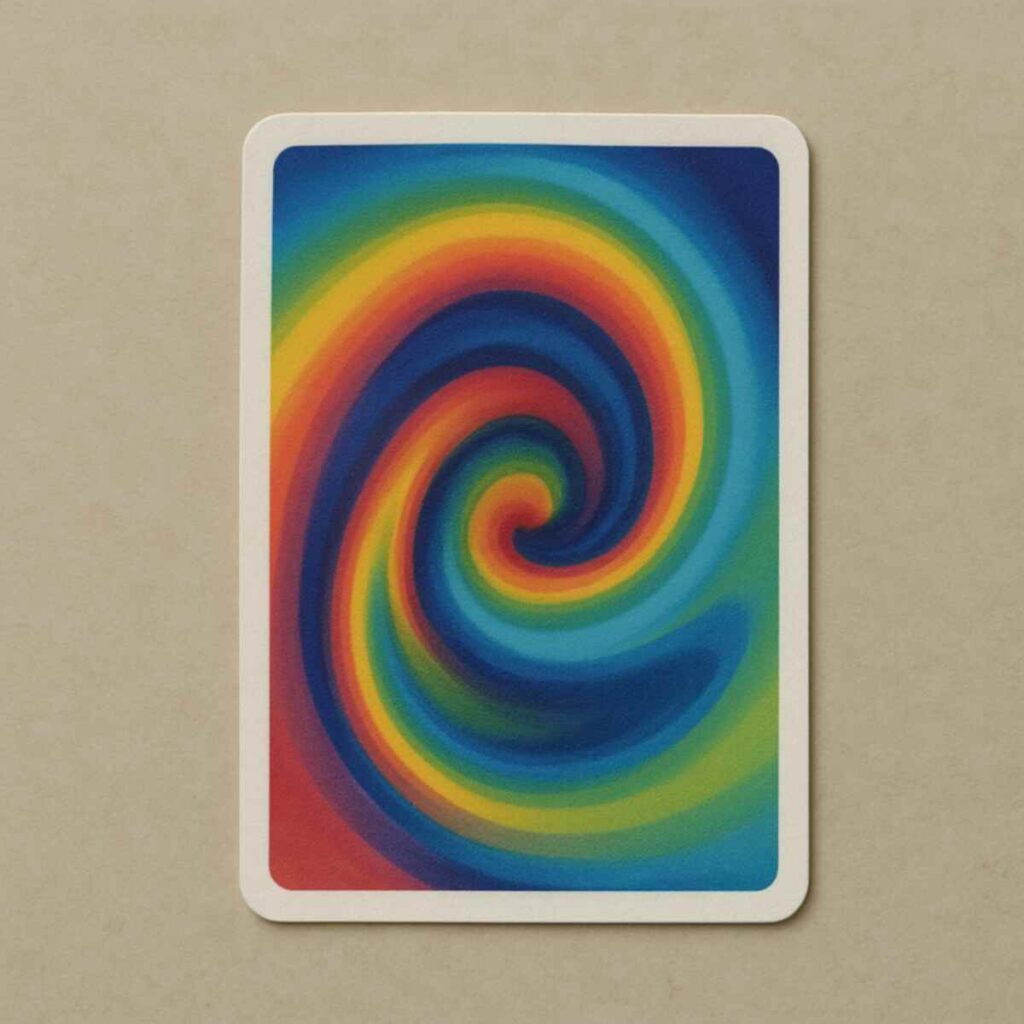
Take a good look at the card above. Do the circles seem to be moving? They aren’t. Your brain is creating that movement all on its own, a fascinating trick of perception that happens entirely inside your head. Check out neuquafootball.com to know more
Cards like this are part of a secret world of illusion game cards, designed not for a typical game of poker, but to play directly with your mind. They use clever art and an understanding of how we see the world to create effects that seem impossible. Think of them less like playing cards and more like a playground for your senses.
You might also like
These clever card games that trick your eyes generally fall into three fascinating groups. Some, like the one you just saw, are pure optical illusions that fool your brain’s motion detectors. Others use distorted art to hide images that only snap into focus from a specific angle. A third type involves specially made “trick” cards that can make anyone look like a master magician. The trick isn’t in the hand; it’s in the card itself.
What Makes a Static Card Seem to Move?
Have you ever stared at a card and sworn the patterns were slowly swirling? It’s a strange feeling, but you’re not imagining it—and the card isn’t secretly electronic. This effect is a fascinating type of optical illusion where your brain generates movement that isn’t really there. It’s not a magic trick in the traditional sense; instead, it’s a predictable, automatic response happening inside your own head when you see certain images.
The secret lies in a specific recipe of high-contrast colors and repeating shapes. When your eyes scan over bold, alternating patterns—like the hypnotic swirl patterns on cards—they send rapid-fire signals to your brain. This intense information overload essentially tricks the motion-detecting parts of your brain into firing, creating a false sense of movement. Your visual system is working exactly as it should, but the art is cleverly designed to push its buttons.
Cards like these belong to a special category of visual perception games. You don’t have to do anything but look at them for the magic to happen. This makes them different from other cards in an optical illusion playing deck that require you to physically interact with them to reveal their secret. For instance, some cards hide an image that only snaps into focus when you view it from a very specific angle.
How Do Anamorphic Cards Hide an Image in Plain Sight?
Consider those incredible 3D chalk drawings on a sidewalk that look like a gaping hole or a giant monster. From most angles, they look like a stretched, distorted mess. But when you stand in the one perfect spot, the image snaps into focus. This fascinating trick is called anamorphic art, and some of the most clever illusion cards use this exact principle to hide a secret image.
The card you see here is a perfect example. Looking straight down, it appears to be nothing more than a meaningless swirl of colors and lines. It’s not designed to be understood from this angle. The artist has deliberately stretched and warped a hidden picture, scattering its pieces across the card’s surface. Your brain can’t piece it together because, from your current viewpoint, it isn’t a coherent image.
So, how do you reveal the secret? It’s wonderfully simple. To solve these cards with hidden image puzzles, you need to change your perspective—literally. Instead of looking down at the card, hold it almost flat, just below eye level. Now, glance across the long surface of the card from one end to the other.
When you view it from this extreme, shallow angle, the distortion reverses itself. The stretched-out parts of the drawing compress, and the scattered shapes magically align. Suddenly, the chaotic mess resolves into a clear, recognizable picture. Unlike a passive optical illusion you just stare at, these cards turn perception into a fun, interactive game, rewarding you for finding the “secret” viewing angle. This is just one way cards can play with depth; other types create a 3D effect you can see from any direction.
Lenticular vs. Stereogram: What’s the Real Difference in 3D Cards?
While some cards use clever angles to hide a flat image, others create a genuine 3D effect that seems to pop right off the surface. You’ve likely seen the most common type without knowing its name: lenticular printing. Think of those old novelty rulers or bookmarks where the picture animates as you tilt it. If you run your finger across the card, you can feel its bumpy, ridged surface. These tiny plastic lenses direct a slightly different image to each of your eyes, fooling your brain into seeing depth or motion. It’s a physical trick built right onto the card.
A completely different approach is the stereogram, which you might recognize from the famous “Magic Eye” posters. Unlike a lenticular card, a stereogram is perfectly flat and looks like a confusing field of repeating patterns. Here, the illusion isn’t created by a plastic lens but by your own perception. To see the hidden image, you have to de-focus your vision and stare through the card, as if looking at something far in the distance. When your eyes find the right alignment, a 3D shape suddenly emerges from the chaotic background.
So, even though both types of cards create 3D illusions, they get there in opposite ways.
- Lenticular Card: Has a ridged, plastic surface. You tilt the card to see the effect.
- Stereogram Card: Is a flat, printed pattern. You stare and de-focus to see the effect.
These differences are key, as many card-based brain teasers use these very principles to hide clues in plain sight.
How to Solve Card-Based Brain Teasers with Hidden Clues
While 3D tricks are impressive, some of the best mind-bending card puzzles are cards with hidden image puzzles that play a different game entirely. Instead of creating an optical illusion that tricks your brain, they use simple camouflage. The solution isn’t about staring until something pops out; it’s about becoming a detective. Solving these brain teasers starts with one simple rule: stop looking for a visual “trick” and start hunting for something that’s hiding in plain sight.
So where do designers hide these clues? Almost never in the main subject of the card, like the face of a king or queen. We are conditioned to ignore the decorative borders, the corner flourishes, and the intricate patterns on the back. That’s exactly where you should focus your attention. These supposedly “unimportant” areas are the perfect hiding spot for a tiny, out-of-place object or a subtly altered shape, precisely because the artist is counting on you to overlook them.
A classic technique to watch for is a break in symmetry. Standard playing cards are designed to look the same even when flipped upside down. Puzzle creators love to exploit this expectation. Scan the card for a design element that doesn’t perfectly mirror its opposite half—a vine with an extra leaf on one side or a scrollwork pattern that isn’t quite identical. Spotting that single imperfection is often the key to cracking the code. This same principle of a “secret mark” is also fundamental to how a beginner’s magic trick deck works.
What Is the Secret Behind a Beginner’s Magic Trick Deck?
That same idea of a “secret mark” is exactly how many impressive yet simple card tricks work. If you’ve ever wondered how a friend could instantly find your chosen card in a freshly shuffled deck, the answer probably wasn’t skill—it was the cards themselves. Many a magic trick card set for beginners relies on a “self-working” principle, where the design of the cards does all the heavy lifting for you. It’s a fascinating blend of art and deception hiding in plain sight.
The most common version of this is called a one-way deck. At first glance, the pattern on the back of every card looks identical and symmetrical. But there’s a tiny, deliberate flaw. As you can see in the image below, a small part of the design—maybe a flower petal or a curl in the scrollwork—is slightly different on one end of the card versus the other. This makes the pattern asymmetrical, so you can secretly tell which way is “up” for every single card in the deck.
This clever design makes the trick almost foolproof. You start with all the cards in the deck facing the same direction. When someone picks a card, they naturally turn it around to look at it before putting it back in the deck. Without realizing it, they’ve just placed their card upside-down relative to all the others. To find it, you don’t need magic; you just spread the cards and look for the one pattern that doesn’t match the rest.
It’s an amazing illusion that feels like a miracle to an observer, but the secret is just a hidden clue you know how to look for. This principle is a cornerstone for anyone learning how card tricks work, proving you don’t need years of practice to create a moment of wonder. But what if you don’t have a special deck? It turns out you can create equally mind-bending card games that trick your eyes with just a couple of ordinary items you already own.
How Can You Create a Simple Illusion with Two Index Cards?
You don’t need a specially printed deck to start exploring these mind-bending concepts. You can create your own powerful illusion using a principle called forced perspective—the same visual trick used in those fun tourist photos where someone looks like they are holding up the Leaning Tower of Pisa. With just two blank cards and a pen, you can create one of the most classic DIY perspective trick card ideas in under a minute.
To make it look like there’s a hole floating right in your hand:
- Take one card and draw a neat semicircle—half of a circle—right on its edge.
- On the second card, draw the other half of the circle, positioned so it will perfectly mirror the first one.
- Hold the cards up, keeping a small gap between them while aligning the two halves to form a complete circle.
So, why does this simple drawing fool your brain? Your mind is a natural problem-solver, hardwired to complete familiar patterns. When it sees the two halves, it instantly joins them into a single, solid shape. But because there’s a real, physical space between the cards, your brain interprets that gap as depth. This makes the circle appear to magically suspend itself in mid-air. This very principle is how many complex anamorphic art cards work, proving that the most amazing illusions often have the simplest secrets.
Where Can You Find the Best Illusion and Puzzle Card Decks?
Inspired by the DIY trick? The world of professionally designed illusion cards is even more fascinating. But with so many options out there, finding the right optical illusion playing deck can feel overwhelming. The key is to know what you’re looking for, as different decks are built for different kinds of fun—whether you’re an art lover, a puzzle solver, or just want a cool novelty to show your friends.
To find the right one, know that most illusion decks fall into one of three main categories. Each offers a completely unique experience:
- Anamorphic Art Decks: Perfect for the visual art fan. These cards use distorted images that only snap into focus when viewed from a specific angle, much like 3D chalk art on a sidewalk.
- Puzzle Decks: If you’re hunting for the best puzzle card decks for adults, this is your category. Decks like the famous “Enigma Deck” hide riddles and clues in their designs, offering some of the best mind-bending card puzzles available.
- Lenticular Decks: Remember those novelty prizes that seemed to move when you tilted them? These cards use that same technology, creating a fun, dynamic 3D or animated effect on each card.
When you’re ready to explore, searching online for terms like “anamorphic cards,” “puzzle deck,” or “lenticular playing cards” will lead you straight to these incredible designs. Each one offers a different way to bend reality, proving a deck of cards can be a gateway to a whole new world of perception.
You’re Now In On the Secret of Illusion Cards
Where you once saw baffling magic, you can now spot the clever method. You have a new guide to solving card-based brain teasers, recognizing the difference between cards that simply trick your eyes, those that ask you to solve a perspective puzzle, and those secretly designed to do the work for a performer. The mystery has been replaced with a well-earned sense of understanding.
This new knowledge turns you from a spectator into an insider. The next time you encounter these visual perception games, try to spot the secret. Is the illusion purely optical, relying on how your brain processes color and shape? Or is it one of the many clever illusion game cards, hiding its secret in plain sight? Each correct guess will build your confidence and sharpen your eye for detail.
Ultimately, these cards do more than play tricks; they hold up a mirror to your own mind. You’ve learned that the most powerful illusions don’t just manipulate cardboard—they work with the fascinating and predictable ways your brain builds the world you see. The real magic, you now know, was never in the deck. It was in you all along.