



Most of us only spare a thought for our electricity when the screen goes black and the room plunges into darkness. On a normal day, you simply plug a phone charger into a wall outlet and expect instant results without worrying about how the power actually got there. We interact with the very edge of a massive, invisible grid that powers our modern lives. Yet, safely guiding that energy from a neighborhood transformer into your hand requires a highly specialized human touch. Choose the best EV charger installation Littleton CO.
Think of your home like a living body. If the wooden framing provides the skeleton and the plumbing acts as the veins, the intricate web of wiring hidden behind your drywall serves as the electrical nervous system. Every light switch, smoke detector, and kitchen appliance acts like a nerve ending waiting for a signal. Keeping those complex pathways clear and functioning perfectly takes much more than just twisting a few copper strands together.


There is a distinct line between the organizations that make the power and the experts who make it usable. Your local utility provider generates raw electricity and delivers it right up to the meter on the side of your house. Once that heavy energy crosses the threshold into your living space, an electrician technician takes over. These professionals serve as the essential bridge between untamed, incoming power and the delicate electronics you rely on daily.
Delivering this power reliably matters, but a technician’s ultimate priority is unwavering safety. Raw electricity is inherently dangerous because it is constantly searching for the fastest path to the ground. According to the Electrical Safety Foundation International, roughly 50,000 home fires are caused annually by electrical issues across the country. Preventing these hidden hazards from sparking behind your walls is the real reason these trained experts are so vital to our communities.
Every flickering dining room light or frequently tripped breaker represents a puzzle waiting to be solved. Effective troubleshooting is how a specialist listens to what your home’s nervous system is trying to say. By utilizing testing tools to read the voltage—which is simply the electrical pressure inside the lines—they can pinpoint exactly where a connection is failing. Providing proper electrical services is therefore less about forcing a broken component to work, and more about diagnosing why the system became stressed in the first place.
Mastering this delicate balance of power requires a unique blend of sharp logic, steady hands, and deep respect for unseen forces. A true professional does not just install fixtures; they act as the vigilant guardian of your property’s entire energetic network. These specialists develop distinct core capabilities to keep the modern world running safely.
The Blueprint Language: Decoding Symbols to Master System Layouts
Walking into a new, unfinished home, you can easily spot where the kitchen or bedroom will be just by looking at the wooden frame. But for an electrician technician, that empty space is actually a hidden highway system waiting to be built. To visualize exactly where the power will travel, these professionals rely on schematics, which are detailed maps showing the planned routes for wires. By interpreting complex electrical schematics and blueprints, a technician can see the entire nervous system of a house long before the drywall goes up. It turns a chaotic maze of studs and beams into a perfectly organized grid.
Instead of drawing realistic pictures of wires and boxes, these blueprints use a unique language of shapes and lines to save space and avoid confusion. You might be surprised to learn how simple some of these blueprint symbols really are once you know the secret code. A basic circle with two parallel lines running through it usually represents a standard wall outlet. A solid line that suddenly breaks and angles upward acts as the symbol for a light switch, looking much like an open gate. Meanwhile, a solid, dark rectangle stands for the main breaker panel, acting as the central hub where all the home’s power originates.
The main panel acts as the central hub, dictating the logical flow of electricity throughout a building. Think of the main panel as a city’s water tower, sending energy down large main lines that eventually branch off into smaller pipes for individual rooms. Technicians perform what is known as load mapping to ensure each of these branches gets exactly the right amount of energy without overloading the system. If a kitchen needs a heavy-duty oven, a refrigerator, and a microwave, the technician calculates that “traffic” to guarantee the wires can handle the demand without tripping a safety breaker.
Because fixing a mistake after the walls are closed is incredibly expensive, technicians must get these pathways perfect on the first try. The old carpenter’s rule of “measure twice and cut once” applies perfectly to establishing these wiring paths. A technician must carefully plan how to drill through wooden studs, route cables around plumbing pipes, and ensure the final electrical services are delivered safely to every corner of the house. Miscalculating a route on the blueprint could mean pulling hundreds of feet of expensive wire back out of the walls to start over.
Mastering this visual language of symbols and load limits takes years of dedicated practice on real job sites. While reading a map might seem straightforward, translating those paper lines into safe, physical reality requires hands-on guidance from seasoned veterans. These skills are passed down through the ranks via a structured path to expertise, differentiating journeyman and apprentice roles and pay.
The Path to Expertise: Comparing Journeyman vs. Apprentice Roles and Pay
Mastering the complex language of blueprints doesn’t happen overnight; it requires a structured system of hands-on mentorship. Unlike many careers that demand a four-year college degree before you see a single paycheck, the electrical trade relies on an “earn while you learn” model. An aspiring electrician technician begins this journey through an apprenticeship, a formal program that combines classroom theory with paid, on-the-job training. This traditional approach ensures that beginners are never left to figure out potentially dangerous electrical systems entirely on their own.
During this foundational phase, an apprentice acts as the direct assistant to a more experienced professional. For about four to five years, they spend their days performing supervised tasks, such as measuring and cutting conduit (the protective tubing that houses electrical wires), installing basic light fixtures, and learning the physical demands of the job. It is a period of intense observation and practice, where mistakes are quickly caught and corrected by a watchful mentor. The pay starts at an entry-level wage—often around half of what a fully qualified professional makes—but it steadily increases each year as the apprentice gains competence and trust.
Once those thousands of hours of training are complete, the worker is eligible to test for their Journeyman license, a massive milestone that shifts their entire career trajectory. Earning this state-recognized license proves they are a fully competent professional who can operate without constant supervision. When looking at journeyman vs apprentice roles and salaries, the biggest difference lies in this newfound autonomy and responsibility. A journeyman can troubleshoot a dead circuit in a family’s kitchen, plan a safe wiring route, and sign off on their own work, which allows them to command a significantly higher hourly rate for their independence.
Beyond the journeyman level sits the esteemed Master Electrician status, reserved for those who have spent additional years mastering local building codes, business management, and complex system designs. The salary gap between these distinct stages is substantial, reflecting the immense value of experience in this hands-on field. While a first-year apprentice earns a modest living wage to start, a seasoned journeyman typically earns a comfortable, robust income, and a master electrician or business owner can easily push into six-figure territory. This transparent financial progression makes the long years of physical labor and studying highly rewarding.
Climbing this rigorous career ladder guarantees that the people working on our homes and hospitals truly respect the invisible power they control. Every step from green apprentice to seasoned master reinforces the reality that electricity is unforgiving, and shortcuts can lead to catastrophic consequences. With their hard-earned credentials finally in hand, these professionals are fully prepared to face the daily hazards of the trade. Managing these daily hazards relies on strict, non-negotiable guidelines and high-voltage protocols for every jobsite.
Living the Safety First Rule: High-Voltage Protocols for Every Jobsite
Stepping onto a jobsite, a technician faces invisible hazards that require far more than just a hard hat. Even a routine service call can quickly become dangerous, especially when an emergency electrician is called to fix a sparking, unpredictable electrical panel in the middle of the night. In these high-stakes moments, technicians guard against an “arc flash”—a sudden, explosive burst of electrical energy that acts like a miniature lightning bolt inside a room. To survive this massive release of heat and light, professionals wear highly specialized Personal Protective Equipment (PPE), which includes thick rubber voltage gloves and heavy, flame-resistant clothing designed to deflect a blast.
Preventing those explosive accidents from happening in the first place is the true mark of a professional. The most critical defense is a procedure known as Lockout/Tagout (LOTO). Think of this as the ultimate “do not disturb” sign: before touching a single wire, the technician shuts off the main power switch and physically locks it with a heavy-duty padlock. They then attach a bright warning tag with their name on it, ensuring no well-meaning coworker or homeowner accidentally flips the power back on while they are working. Strict high voltage safety protocols for field work dictate that the person holding the key is the absolute only one who can restore the power.
Even with the power supposedly disabled, professionals treat every wire as if it is live, which brings us to their specialized gear. You might think any screwdriver from the local hardware store is fine for tightening a terminal, but standard metal tools act as high-speed highways for electricity to reach your hands. Technicians use strictly tested insulated tools that are wrapped in thick, non-conductive materials like specially formulated plastics or rubber. This protective coating acts as an impenetrable barrier, guaranteeing that if a tool accidentally touches a live wire, the dangerous current stops before it ever reaches the user’s skin.
Physical barriers and padlocks are incredibly effective, but seasoned technicians also rely on unique behavioral habits to stay safe. If you ever watch a master electrician testing an open circuit, you might notice them doing something strange: keeping one hand firmly tucked into their pocket. This is known as the “One-Hand Rule,” a brilliant, life-saving technique designed to prevent a lethal electrical shock. By keeping the second hand away from grounded metal walls or pipes, they ensure that if electricity does accidentally enter their working hand, it cannot complete a circuit by traveling across their chest and through their heart.
Ultimately, these immediate, physical defenses allow technicians to routinely handle forces that could easily destroy a building. Yet, keeping the worker alive during the installation is only half the battle; the final product must also keep the family living inside the home safe for decades to come. Governing these installations requires strict adherence to the National Electrical Code, ensuring long-term safety and professional integrity.
The Electrician’s Bible: Why NEC Compliance Protects Homes and Careers
House fires from electrical faults are relatively rare today compared to a century ago thanks to a massive, evolving rulebook known as the National Electrical Code (NEC). Think of the NEC as the ultimate set of building traffic laws, dictating exactly what size wire can be used and where a specific type of outlet must go. By strictly regulating how power flows behind your walls, these standards prevent wires from overheating and melting their insulation, which drastically reduces the risk of hidden electrical fires in residential properties.
One of the most visible examples of these rules is likely sitting right inside your kitchen or bathroom. If you look near your sinks, you will spot outlets with little “test” and “reset” buttons on them, known as Ground Fault Circuit Interrupters (GFCIs). To meet strict National Electrical Code compliance guidelines, technicians must install these specialized outlets anywhere water and electricity might mix. A GFCI acts like a hyper-vigilant security guard monitoring the flow of power; if it senses even a tiny amount of electricity leaking out of its proper path—perhaps through a wet hand—it shuts the power down in milliseconds to prevent a deadly shock.
Ignoring these life-saving rules does more than just put a family in physical danger, as it can also create severe financial headaches. When homeowners attempt complex do-it-yourself wiring or hire uncertified workers to bypass safety standards, those hidden code violations act like ticking time bombs for their property value. If an inspector discovers unpermitted work during an appraisal, it can instantly derail a home sale or cause an insurance company to deny a claim after property damage occurs. To protect their largest investment, smart homeowners rely on licensed professionals providing legitimate electrical services to guarantee every wire is routed legally and safely.
Because technology is always advancing, the rules governing how we power our homes never stay still for long. The NEC is rigorously reviewed and updated every three years to safely accommodate modern energy demands, from heavy-duty electric vehicle chargers in the garage to complex rooftop solar arrays. Staying perfectly aligned with this ever-changing rulebook requires an electrician technician to have both an incredibly sharp mind and the precise gear needed to test their work. Translating these strict codes into safe, physical reality requires must-have tools built specifically for the modern professional.
Beyond the Screwdriver: Must-Have Tools for the Modern Professional
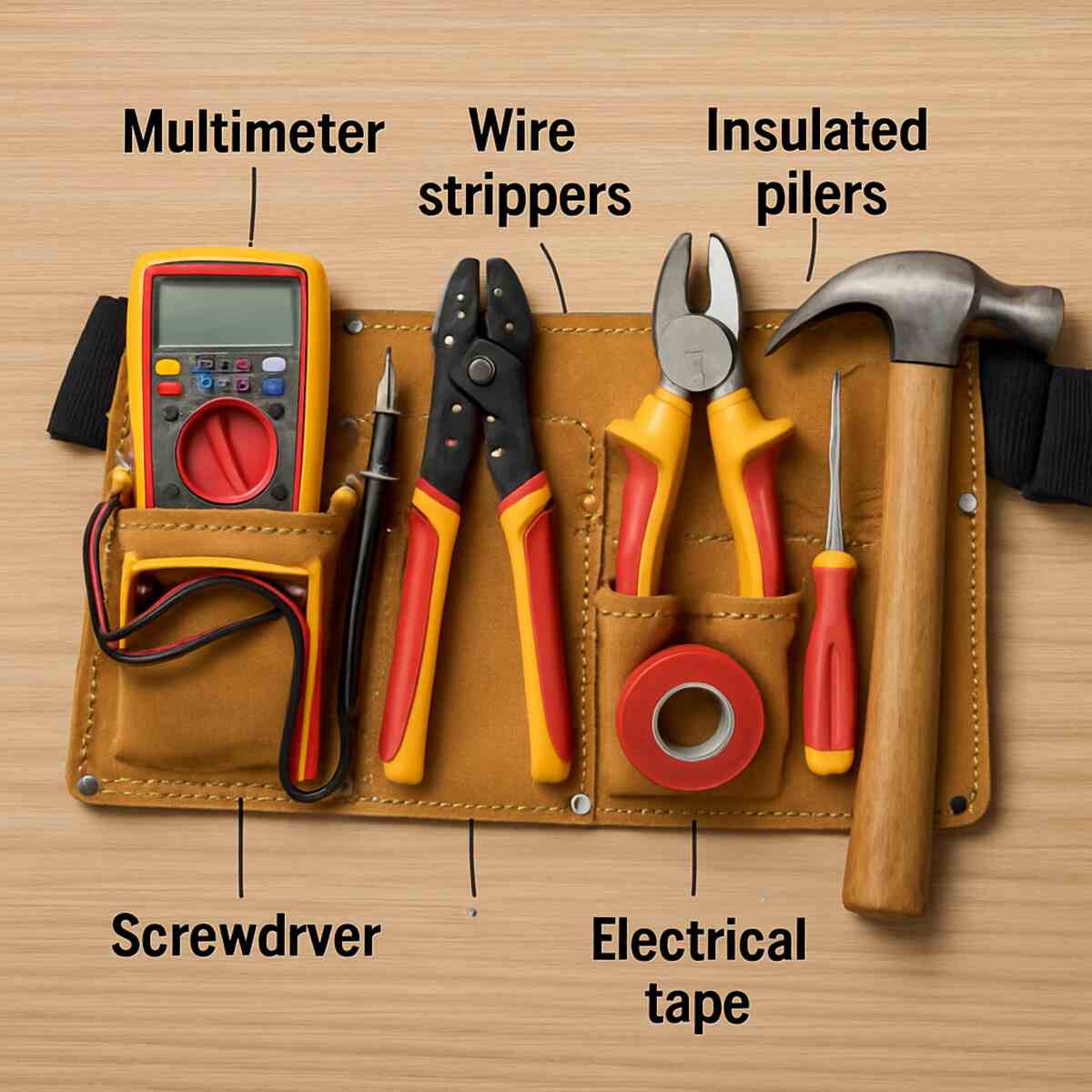
While strict safety codes provide the blueprint for a protected home, bringing those plans to life requires gear built specifically for handling invisible energy. If you peek into the bag of an electrician technician, you will not find the basic metal screwdrivers sitting in an average garage. Instead, they rely on a specialized kit of essential tools for professional electrical work, starting with heavily insulated hand tools. These pliers and cutters feature thick rubber grips designed to stop current from traveling up the metal shaft, serving as a vital physical barrier between the worker and a live wire.
Before those pliers ever touch a circuit, the professional must perform a crucial “sanity check” using a non-contact voltage tester. Looking somewhat like a thick plastic pen, this life-saving gadget acts like a proximity alarm for electricity. When a worker brings the tip near a wire or an outlet, it flashes red and beeps loudly if power is actively flowing. Because human senses cannot detect an electrical charge, this simple test proves that the breaker is truly shut off before hands go into a dark electrical box.
The deepest diagnostic work relies on a versatile device known as a multimeter, which functions as the electronic eyes of the operation. This handheld tool uses two wire probes to measure various forces, such as voltage—which is essentially the “pressure” of the electricity pushing through the lines. A multimeter also tests for continuity, meaning it checks whether an electrical path is complete and unbroken. Think of continuity like checking a bridge over a river; if the bridge is intact, power can safely cross, but if a wire has snapped behind the drywall, the meter alerts the technician to the hidden break.
Translating invisible currents into readable numbers and warning sounds takes the danger out of home maintenance. This precision equipment transforms risky assumptions into a methodical, step-by-step scientific process. Relying on exact data allows experts to rapidly locate the exact point where a residential system is failing. By mastering these diagnostic instruments, professionals are perfectly equipped to handle the frustrating household problems that drive families crazy, easily paving the way for solving the mystery of the tripping breaker and flickering lights.
Solving the Mystery of the Tripping Breaker and Flickering Lights
Plunging into sudden darkness while blow-drying your hair is a universally frustrating experience, but it is actually your home’s safety system working exactly as designed. Remember our earlier “water pipe” analogy, where electrical current (amps) represents the volume of water flowing through the lines? A circuit breaker acts like a vigilant security guard monitoring that flow. When a breaker trips, it usually points to one of two distinct issues: an overload, which is simply too much traffic trying to squeeze through a single pipe, or a short circuit, a highly dangerous situation where electricity escapes its intended path and takes a violent, uncontrolled shortcut.
To see if you are dealing with a simple overload, you can perform a basic load calculation without any special tools. Most standard household breakers allow for 15 or 20 amps of flow. If you plug a heavy-duty space heater (which often draws about 12 amps) and a powerful vacuum cleaner (another 10 amps) into the same bedroom circuit, their combined 22-amp draw exceeds the pipe’s capacity. The breaker senses this dangerous traffic jam and intentionally shuts off the power to prevent the hidden wires from overheating and causing a fire inside your walls.
Figuring out exactly what caused the shutdown requires a methodical approach. When troubleshooting persistent circuit breaker tripping, follow this simple five-step checklist to isolate the culprit:
- Turn off all light switches and unplug everything in the affected dark room.
- Firmly reset the breaker at the main panel by pushing the switch completely to the “off” position, then firmly back to “on.”
- If the breaker instantly trips again with nothing plugged in, you likely have a wiring problem or a ground fault—a dangerous leak where electricity touches an unintended surface, like a metal box or moisture.
- If the power stays on, plug your devices back in one by one and turn them on.
- Once a specific device causes a trip, you have identified a simple device problem rather than a systemic wiring failure.
Beyond sudden power losses, another common household mystery involves dimming bulbs or buzzing switches. Repairing flickering lights and damaged outlets often comes down to hunting for a loose connection. Electricity relies on a continuous loop, traveling out on a hot wire and returning on a neutral connection—the safe pathway that carries the current back to the panel. When these connections become loose, the electricity tries to physically jump the gap, creating a faint sizzling noise known as arcing. If you hear this crackling sound or feel heat radiating from a wall plate, the loop is failing and needs immediate professional repair.
Ultimately, recognizing the difference between a minor appliance overload and a major wiring defect empowers you to make safe, informed decisions about your home. While unplugging a hair dryer takes just seconds, discovering that your entire kitchen struggles to run modern appliances might signal that your home’s electrical foundation is out of date. Persistent resets turning into a daily routine often signal the need to look behind the panel and consider a 200-amp upgrade for modern smart home integration.
The 200-Amp Upgrade: Cost Factors and Smart Home Integration Secrets
Imagine pulling into your garage with a brand-new electric vehicle, only to realize your home lacks the electrical juice to charge it safely. Older houses were often built with 100-amp breaker panels, which was plenty of power when a refrigerator and a few televisions were the biggest daily draws. Today, however, adding an EV charger, a modern electric HVAC system, or an induction stove requires a massive increase in amperage capacity—the total volume of electricity your home can safely pull from the street at one time. Stepping up to a 200-amp service is like replacing a standard garden hose with a much wider fire hose, ensuring your home has enough capacity to run all high-tech devices simultaneously without starving any of them.
Figuring out if you actually need this bigger “pipe” involves a bit of electrical math performed by a licensed technician. They calculate your home’s total demand to see if your current setup is stressed, keeping a close eye on load balancing—the practice of evenly distributing power across the breaker box so no single wire gets overwhelmed. When evaluating the cost factors for electrical panel upgrades, the final price heavily depends on whether the technician simply needs to swap out your indoor metal box, or if the utility company must run entirely new, thicker cables from the neighborhood power pole to your meter.
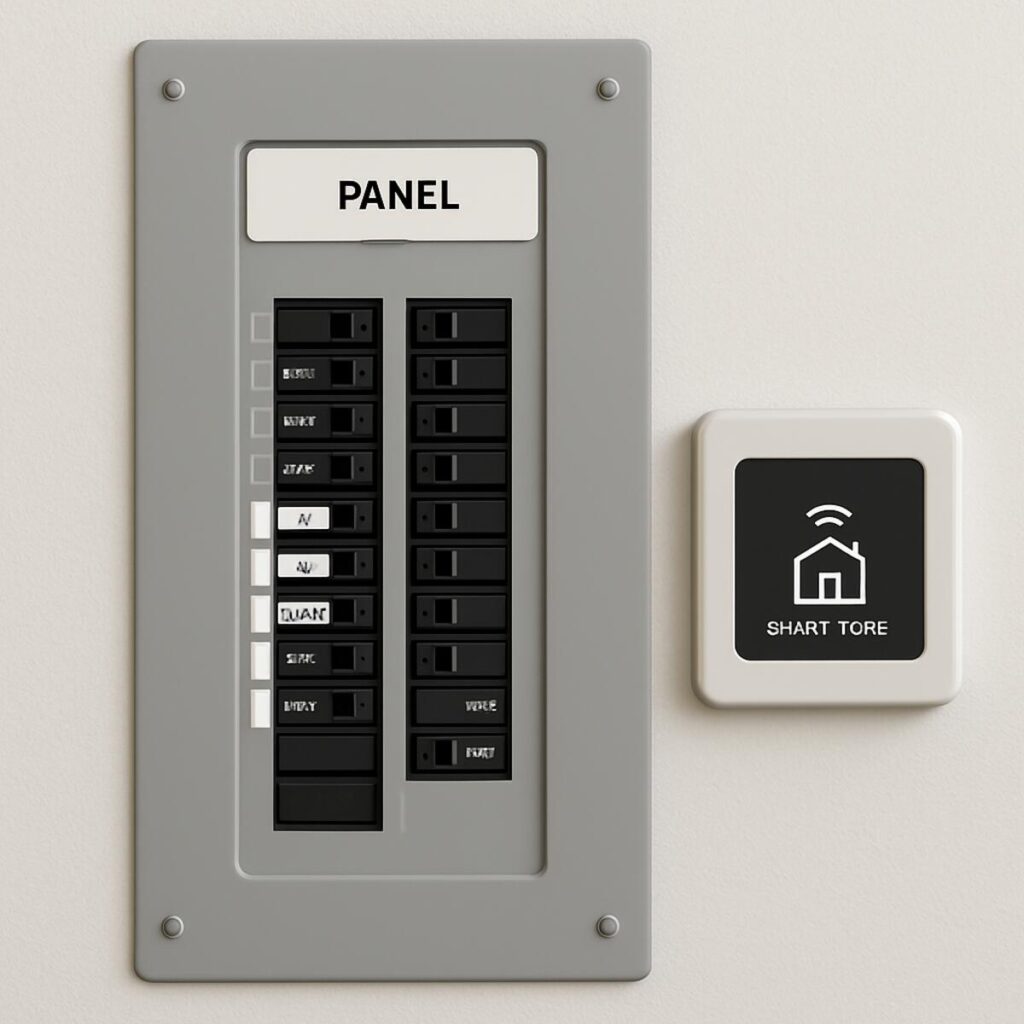
Beyond simply handling more power safely, modern electrical panels have evolved from silent metal boxes into the true brains of a modern house. If you are planning a smart home automation system installation, the main breaker panel is actually the ultimate starting point. Rather than just setting up a few Wi-Fi-enabled lightbulbs in the living room, an integrated smart panel allows you to monitor, schedule, and control the electricity flowing to every single appliance directly from a phone or tablet.
The magic behind this modern convenience lies in specialized smart modules wired directly alongside your standard breakers. These intelligent devices act like high-tech security guards that not only watch for safety hazards but also track your energy consumption in real time. During installation, an electrician connects these smart modules so they can independently switch high-demand circuits on or off, allowing you to automatically disable your water heater during expensive peak billing hours or prioritize solar power straight to your car charger.
Upgrading your home’s electrical heart ultimately provides immense peace of mind, blending robust physical safety with incredible digital control. When stakes involve keeping life-saving machinery running or powering an entire manufacturing floor, diagnostics for commercial and industrial power distribution introduce entirely new scales of complexity.
Scale and Complexity: Diagnostics for Commercial and Industrial Power Distribution
The transition from a quiet residential basement to a sprawling factory floor introduces a massive shift in electrical demands. While a standard home runs on a single continuous wave of electricity—known as single-phase power—factories require a much more robust delivery system called three-phase power. Imagine pushing a heavy, broken-down car all by yourself; you push hard, pause to step forward, and push again in pulses. That is how single-phase power operates. Now, picture three people pushing that same car, each taking turns at perfectly staggered intervals so the vehicle never loses momentum. That constant, overlapping flow of continuous energy is three-phase power, and it provides the unyielding strength needed to run heavy machinery.
When these massive systems fail, the required troubleshooting skills are highly specialized. Performing commercial power distribution system diagnostics involves tracking down issues in this overlapping three-phase flow before a downed assembly line halts production entirely. Because industrial machinery does not simply plug into a standard wall outlet, electricians must measure all three electrical waves simultaneously with digital tools to ensure perfect balance. If even one of those power phases drops out unexpectedly, a massive factory motor could overheat, shudder violently, and ultimately tear itself apart from the uneven magnetic forces.
Physical protection for these high-voltage pathways is just as critical as the electricity itself. Unlike household wiring that is tucked safely out of sight behind soft drywall, industrial cables run through harsh environments filled with forklift traffic, extreme heat, and flying metal sparks. To survive these physical hazards, technicians encase the wiring in conduit—rigid metal or heavy-duty plastic tubes that act as armor for the electrical system. Bending, cutting, and routing these thick metal pipes across high factory ceilings demands precise geometry and careful planning to ensure the wires inside remain completely isolated from danger.
At the end of that armored piping sits the brain of the industrial floor, a large metal cabinet called a Motor Control Center, or MCC. Think of an MCC as a gigantic, highly sophisticated version of your home’s breaker box, built exclusively to command and protect massive industrial machines. For anyone exploring an industrial electrical contractor career path, mastering the intricacies of the MCC is a major career milestone. Inside these cabinets, technicians troubleshoot complex safety relays that ensure a heavy manufacturing conveyor belt stops instantly if a worker hits an emergency button.
Scaling up electricity to this level proves just how adaptable basic engineering principles must be. Whether a technician is bending steel conduit for an automotive plant or balancing energy to a city water pump, the goal is always uncompromised safety and reliability. This push for cleaner, smarter electricity ultimately merges renewable energy with residential grids.
Powering the Future: Merging Renewable Energy with Residential Grids
Catching the sun’s rays from your roof and using them to brew your morning coffee sounds like magic, but it is quickly becoming a standard feature in modern homes. As neighborhoods transition toward green energy, the electrical panel in your garage is taking on responsibilities once reserved for massive power plants. This shift fundamentally changes how a house breathes; instead of just consuming electricity from the city grid, your home can now generate its own. Bringing this technology to life requires precise planning to merge traditional household wiring with advanced solar equipment seamlessly.
The journey from a rooftop panel to your coffee maker involves a crucial translation step, building on the fundamental difference between alternating current (AC) and direct current (DC). Solar panels absorb sunlight and produce DC power, which flows in a single, straight line like water moving steadily through a hose. However, your home’s appliances are designed to drink AC power, which constantly reverses direction to travel long distances efficiently. To bridge this gap, technicians install a device called an inverter, which acts as a bilingual translator converting the raw DC solar energy into the usable AC electricity your microwave and television require.
Managing all that newly translated power brings up an interesting problem, as your home often produces more electricity on a sunny afternoon than you can actually use. Rather than letting that valuable energy go to waste, the system sends the surplus backward into the city grid through a process called net metering. Think of net metering like a digital electrical checking account; when you deposit extra power, your electric meter practically spins backward, earning you credits that you can spend when the sun goes down. Handling this two-way street of electricity requires mastery of renewable energy system integration for residential properties to ensure the neighborhood grid isn’t overwhelmed.
When a severe storm knocks out neighborhood power, you might assume your solar panels will automatically keep your lights on, but standard systems purposefully shut down to protect utility workers. If your panels kept pushing electricity back into the dark grid, they could electrocute the line workers trying to repair the downed cables. To keep your home running safely during a blackout, an electrician technician must install a specialized cutoff switch and a home battery bank. These wall-mounted batteries store your excess daylight power and legally disconnect your house from the grid, creating a self-sustaining island of electricity until normal service is restored.
Every day, the intersection of green energy and household safety grows more complex, demanding far more than just twisting a few wires together. The professionals who install these intricate systems must blend traditional construction skills with a deep understanding of modern digital power management. Mastering these emerging technologies is what separates a standard wire-puller from a highly sought-after industry expert. Managing the future of residential power requires a dedicated career path, starting with a clear action plan to become a licensed master electrician.
Your Five-Step Action Plan to Becoming a Licensed Master Electrician
The flick of a light switch no longer needs to feel like magic. The logic behind the walls reveals how electrician technicians rely on specialized tools, strict safety protocols, and detailed blueprints to keep our modern world running. By grasping these core concepts, true electrical fluency becomes attainable.
Start building confidence right at home by performing a basic safety audit. Take a moment today to test your GFCI outlets—those receptacles near your kitchen and bathroom sinks with the small red and black buttons. Pressing “test” and then “reset” ensures these built-in “security guards” are actively protecting your household from unexpected surges.
If exploring this invisible nervous system sparks your interest, turning that curiosity into a lifelong career is incredibly rewarding. The electrical trade is a journey of continuous learning, where mastering the fundamentals opens doors to immense professional and personal growth.
Stepping into this field requires a clear, step-by-step progression from scratch. If you are exploring a career change, your action plan starts with meeting these standard certified electrical apprenticeship program requirements:
- Earn a high school diploma or equivalent certification (GED).
- Complete and pass at least one full year of basic algebra.
- Obtain a valid driver’s license and secure reliable transportation.
- Pass a standardized aptitude test evaluating reading and math skills.
- Submit to and successfully clear a standard safety drug screening.
Once accepted, apprentices complete years of hands-on training, pass their journeyman exam, and eventually earn the title of licensed master electrician. Whether you decide to climb that professional ladder or simply use your newfound knowledge to keep your home safe, you will never look at a standard light switch the exact same way again.